Your Diet Isn’t “Bad” — It Just May Not Be Working for Your Body Anymore

Many adults in India face high blood sugar, high cholesterol, fatty liver, PCOS, high blood pressure, or weight gain. Often, these problems show up together. In fact, experts call them “lifestyle disorders” because they share common roots. For example, insulin resistance, too much belly fat, low activity, poor sleep, and old eating habits link these conditions. According to the World Health Organization, these issues are rising in India. Therefore, nutrition for lifestyle disorders is more important than ever.
Some people think a balanced diet means eating less or skipping certain foods. However, balance means getting the right mix of nutrients. In India, meals often have more rice or roti and less protein or vegetables. For better health, your plate should include:
This mix helps manage blood sugar, cholesterol, and weight.
Instead of asking:
“Is rice good or bad?”
Ask:
“What does the whole plate look like?”
That is a much more useful nutrition question.
Instead of counting calories, try the plate formula. First, fill half your plate with vegetables. Next, add a quarter protein and a quarter carbohydrate. Then, add a little healthy fat. This simple formula works for most Indian meals. It also helps you eat more fibre and protein, which support better health. For example, this method can help with managing insulin resistance and weight gain.
Protein supports muscle health, blood sugar control, and fullness. Include sources like dal, chana, paneer, eggs, curd, chicken, or fish in each meal.
Carbs provide energy, but excess portions may affect blood sugar and weight. Choose smaller portions, more fibre, vegetables, and whole grains.
Fat also comes from ghee, butter, fried foods, sweets, and packaged snacks. Use oils moderately and choose nuts and seeds for healthier fats.
Fibre can support blood sugar, cholesterol, and weight management. Add vegetables, fruits, pulses, whole grains, salads, and sprouts regularly.
Sometimes, small extras add up. For instance, biscuits with tea, sugary drinks, fried snacks, and sweets can sneak in many calories. Even healthy foods like nuts or dried fruit can add up if eaten in large amounts. Because these calories are easy to miss, they can lead to weight gain. Try to notice these hidden sources and enjoy them less often.
You do not need to eat every two hours.
You also do not necessarily need to fast for 18 hours.
There is no magical clock that works for everyone.
What often matters more is consistency.
Very long gaps can leave some people extremely hungry and make the next meal larger than intended.
Late-night heavy meals may also make metabolic management harder for some people.
A practical routine may involve:
For someone with diabetes taking medication, meal timing may need even more individualisation.
That is why copying an intermittent fasting routine from social media is not the same as receiving nutrition care.
Eating large portions of brown rice or millets | Portions still matter |
Snacking on too many nuts | They are healthy but high in calories |
Fruit-only dinners | missing protein and fibre can spike blood sugar |
Drinking fruit juices | juices have less fibre and more sugar than whole fruit |
Using too much ghee or coconut oil | Moderation is key, even with healthy fats
|
Therefore, balance and variety are important, even with healthy foods.
Fruits are more than a healthy snack. They provide essential vitamins, minerals, antioxidants and fibre that support immunity, digestion, heart health and overall well-being.
According to the ICMR–National Institute of Nutrition’s Dietary Guidelines for Indians (2024), individuals should consume at least 100 grams of fresh fruit and 400 grams of vegetables daily. These recommendations help support adequate nutrient intake and long-term health.
ICMR National Institute of Nutrition
Choose seasonal fruits such as guava, papaya, oranges, apples or bananas. Whole fruits are generally preferable to fruit juices because they retain fibre and support better fullness. Including a variety of fruits throughout the week also helps provide different nutrients.
For people managing diabetes, fruit portions and carbohydrate intake should be considered as part of their overall meal plan.
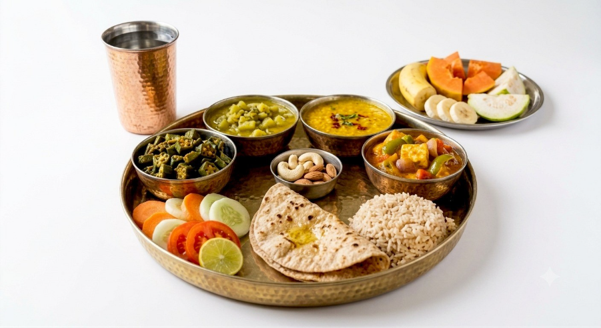
According to the ICMR–National Institute of Nutrition Dietary Guidelines for Indians (2024), a balanced diet should include a variety of food groups to support adequate nutrient intake and reduce diet-related health risks.
The following table presents recommended daily quantities for a reference 2,000-calorie vegetarian diet.
Food Group | Recommended Daily Intake | Key Nutritional Benefits |
Fresh fruits | 100 g | Provides vitamins, antioxidants and fibre |
Vegetables (including green leafy vegetables) | 400 g | Supplies fibre, vitamins and minerals |
Cereals and millets | 250 g | Provides energy, carbohydrates and some fibre |
Pulses and legumes | 85 g | Provides plant protein, iron and fibre |
Milk and curd | 300 ml | Supplies calcium and protein |
Nuts and seeds | 35 g | Provides healthy fats, protein and micronutrients |
Fats and oils | 27 g | Supplies essential fatty acids and supports nutrient absorption |
Focus on slow-digesting carbs, more protein, and fibre. For example, choose whole grains, pulses, and non-starchy vegetables. Limit sweets and sugary drinks. Eating small, regular meals can help control blood sugar. The CDC and Indian Diabetes guidelines support these steps.
Condition | Nutrition Focus |
PCOS | More protein, fibre & healthy fats; limit sugar and refined carbs. |
Fatty Liver | Reduce sweets, fried foods & sugary drinks; increase fibre and lean protein. |
High Cholesterol & Triglycerides | Choose fibre-rich foods, nuts, seeds & fish; limit fried foods and saturated fats. |
Crash diets promise quick results but rarely last. Often, they cut out whole food groups or are too strict. As a result, people regain weight or feel tired. Instead, building new habits meal by meal works better. Nutrition for lifestyle disorders should fit your real life, not just a few weeks.
NutriClinics offers a personalized, report-based approach to nutrition in India. First, they review your health reports and lifestyle. Then, they create a meal plan that fits your needs and culture. This helps manage high blood sugar, cholesterol, fatty liver, PCOS, and weight gain together. Because every person is different, your plan is unique to you.
Every meal is a chance to support your health. Even small changes can add up over time. With the right nutrition for lifestyle disorders, you can feel better and lower your risk of future problems. In India, balanced meals and simple habits make a big difference.
👉 Book your heart-health nutrition consultation at NutriClinics today — because your heart deserves more than a generic diet chart.

Tell us about yourself and we'll match you with the right dietitian.