
Nearly one in three adults worldwide is now living with fatty liver disease. Why the right plate matters more than any single pill.
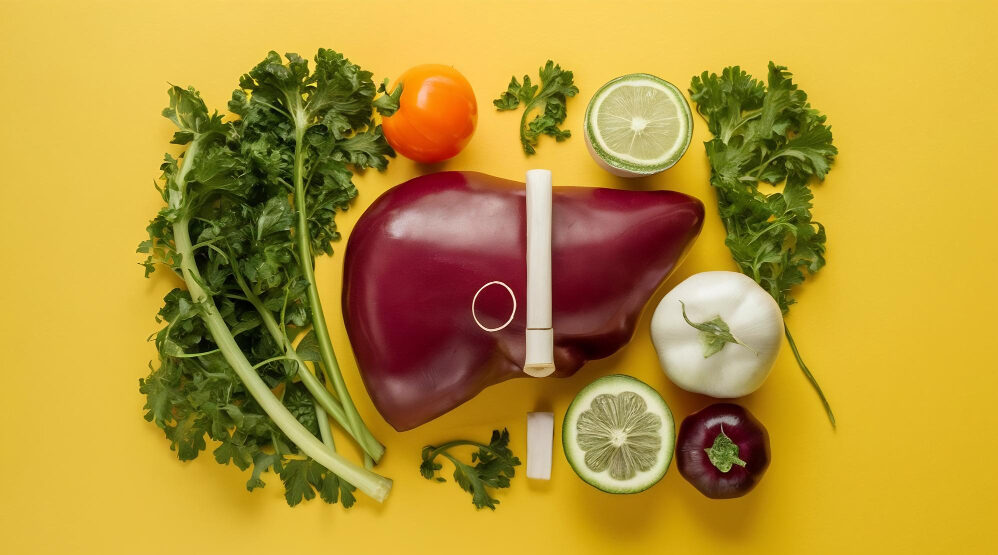
Fatty liver disease rarely announces itself. It accumulates quietly — one meal, one missed workout, one sedentary year at a time — long before a scan or a blood test ever gives it a name.
Non-alcoholic fatty liver disease (NAFLD), now increasingly referred to as metabolic dysfunction-associated steatotic liver disease (MASLD), begins when fat accumulates in liver cells beyond what the organ is built to hold. Left unchecked, that fat can trigger inflammation, scarring, and — over years — irreversible damage.
A landmark 2023 meta-analysis in Hepatology, drawing on more than nine million people worldwide, found that global NAFLD prevalence has climbed from roughly a quarter of adults in the 1990s and 2000s to well above a third in studies from 2016 onward — and the trajectory is still rising.
The liver, unlike the heart or the lungs, suffers in silence. By the time fatigue, discomfort, or abnormal labs appear, the underlying metabolic disruption has often been building for years.
of adults worldwide are now estimated to have fatty liver disease
body weight loss is the threshold shown to meaningfully improve liver inflammation
Fatty liver disease has no approved medication that reverses it outright. Nutrition and lifestyle change remain the primary, evidence-backed treatment — a position held consistently by the American Association for the Study of Liver Diseases (AASLD), the European Association for the Study of the Liver (EASL), and the World Health Organization.
And yet, the guidance most people receive rarely goes beyond a familiar refrain: “eat healthy, cut sugar, move more.”
The sentiment is correct. The specificity is missing. Liver disease guidelines are precise about how much weight loss matters and which dietary pattern earns it — detail that a generic pamphlet was never built to carry.
Consider the moment a scan first reveals fat on the liver. The report is filed. The advice is brief. And the question that lingers is the one no leaflet answers:
“So — what should I actually be eating now?”
That question is where nutrition support for fatty liver begins. Not as a generic diet sheet, but as a plan shaped by body weight, insulin resistance, existing conditions like diabetes or high cholesterol, and how far the liver disease has already progressed.
No single meal plate is engineered to fit every liver. A structured, personalized approach — not a one-size list of “good” and “bad” foods — is what clinical nutrition guidelines actually call for.
Fatty liver disease moves through recognizable stages — and nutritional priorities should move with it.
Stage | Nutritional Priority |
At Risk (obesity, diabetes, high cholesterol) | Build early habits around |
Simple Fatty Liver (steatosis) | Achieve gradual weight loss of 3–5% through a balanced, calorie-mindful diet to reduce liver fat |
Non-Alcoholic Steatohepatitis (NASH) | Target 7–10% weight loss with a Mediterranean-style eating pattern to ease liver inflammation |
Advanced Fibrosis | Prioritize protein adequacy, sustained weight loss beyond 10%, and close dietitian supervision |
Maintenance & Prevention | Sustain whole-food habits, limit added sugar and alcohol, and stay active to prevent relapse |
The strongest evidence behind any single dietary pattern for fatty liver points toward the Mediterranean diet — rich in vegetables, whole grains, legumes, and healthy fats, and consistently favored in AASLD and EASL guidance over low-fat or fad alternatives.
Foods to Include
Foods to Limit
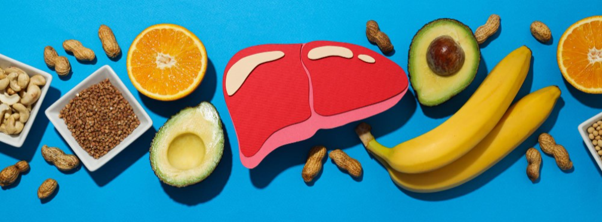
Diet carries the most weight in fatty liver management, but it does not act alone. Guidelines consistently pair nutrition with 150–300 minutes of moderate physical activity per week, consistent sleep, and stress management — each of which influences the same insulin resistance pathways that drive fat accumulation in the liver.
When fatty liver nutrition is guided by a qualified dietitian or nutritionist rather than generic advice, the outcomes are measurable, not anecdotal.
These are not incremental gains. They represent the difference between a liver that quietly progresses toward cirrhosis and one that meaningfully heals.
Preventing fatty liver disease follows the same evidence base as treating it: a balanced, whole-food diet, regular movement, and routine screening for those at risk. The Centers for Disease Control and Prevention (CDC) recommends regular check-ups for anyone carrying metabolic risk factors — obesity, diabetes, or high cholesterol among them.
Early detection changes the trajectory. Fatty liver caught at the steatosis stage is often fully reversible; caught at advanced fibrosis, the goal shifts to slowing further damage.
Persistent fatigue, discomfort in the upper right abdomen, or yellowing of the skin warrant medical attention without delay. So does any combination of obesity, type 2 diabetes, or high cholesterol — risk factors that justify proactive screening even before symptoms appear.
A qualified nutritionist or dietitian can translate general guidelines into a diet built around an individual’s labs, comorbidities, and stage of disease — the difference between advice that sounds right and a plan that actually works.
A diagnosis is not a diet plan. That is where NutriClinics begins.
Our qualified nutritionists translate liver-health guidelines into a plan built around your body, your labs, and your daily life — not a printed sheet of “safe foods.”
Not a diet chart. A partnership. Not one plate — one plan, designed for you alone.
Fatty liver disease develops quietly, but it does not have to progress quietly. With the right foods, sustainable habits, and expert guidance, the liver has a genuine capacity to heal.
This article is for general information and is not a substitute for individualised medical advice. Always consult your treating physician and a qualified nutritionist before changing your diet for fatty liver or any liver condition.
Talk to a Qualified Nutritionist at NutriClinics today — because every liver deserves a plan built around the person carrying it.
Book a Consultation